






Skip to content

Best ERP for Manufacturing Industry

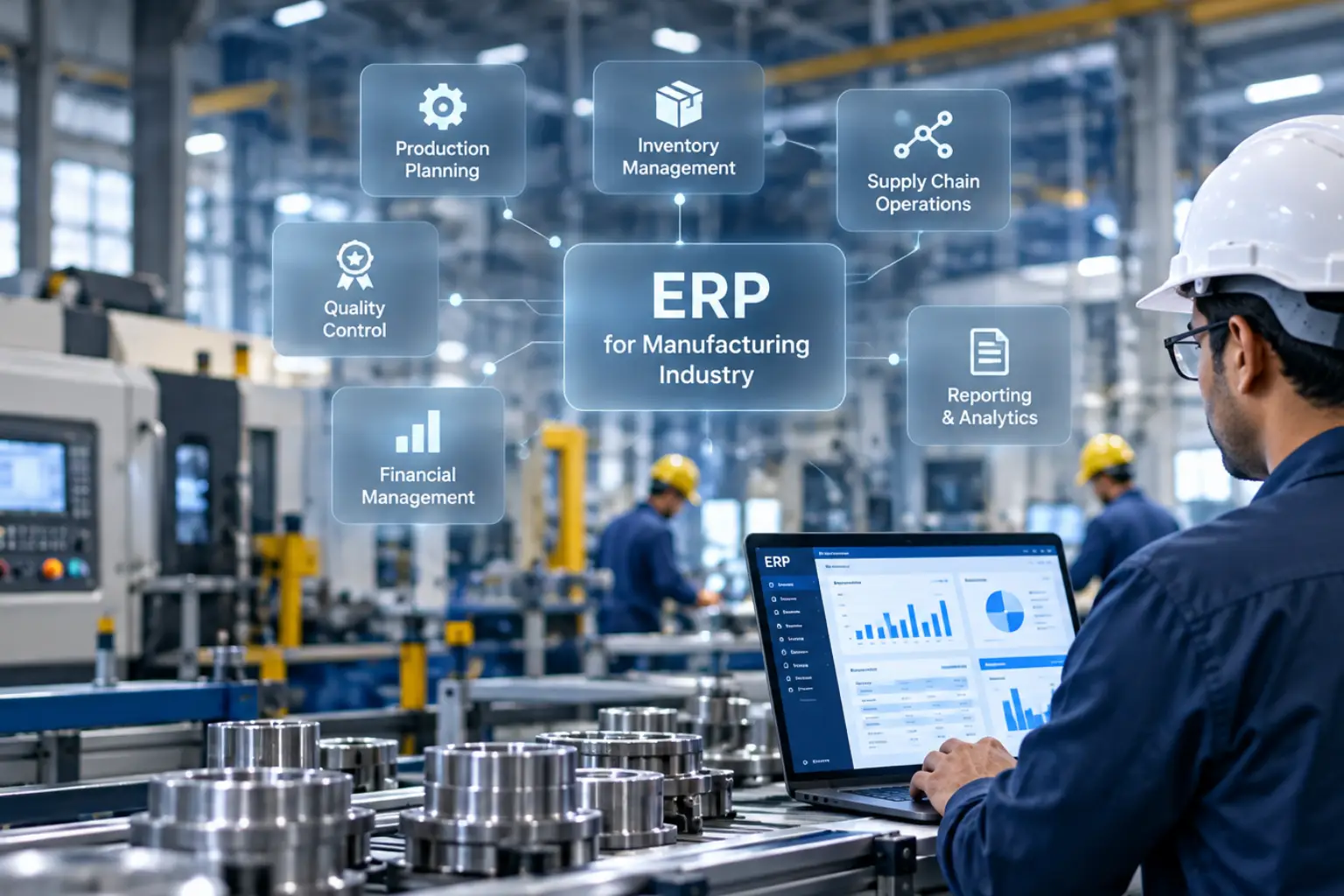
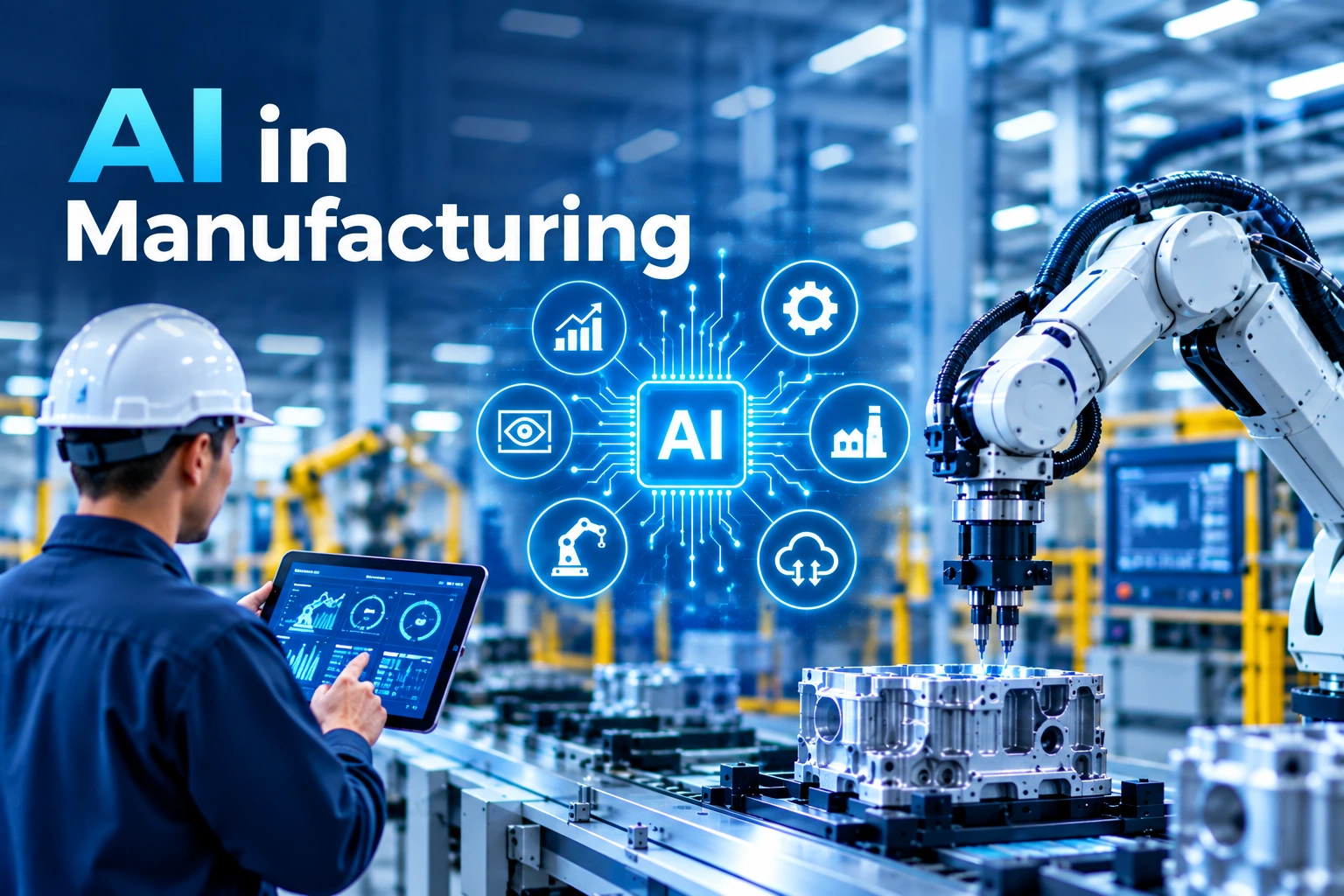
ERP for Manufacturing Industry helps businesses streamline production planning, inventory management, supply chain operations, quality control, and financial processes through a unified platform. Solutions such as Sage X3 provide manufacturers with integrated tools to manage these processes and improve visibility across their operations.
Manufacturing ERP

What is ERP for Manufacturing Industry?

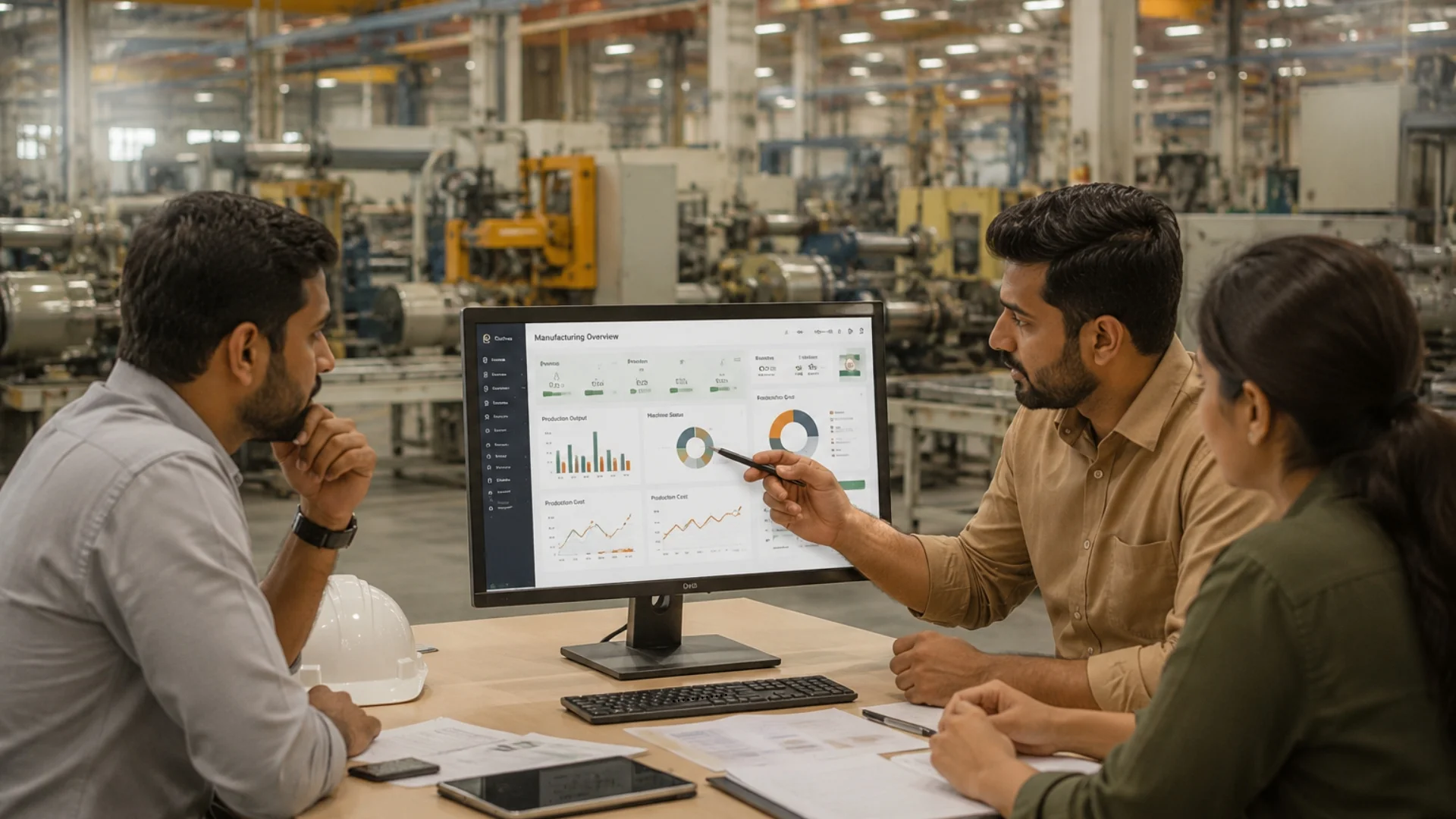
ERP for the manufacturing industry is a specialised system that integrates and manages critical manufacturing operations—from production planning and BOM management to inventory, procurement, quality control, and finance—within a single, streamlined, and automated platform.

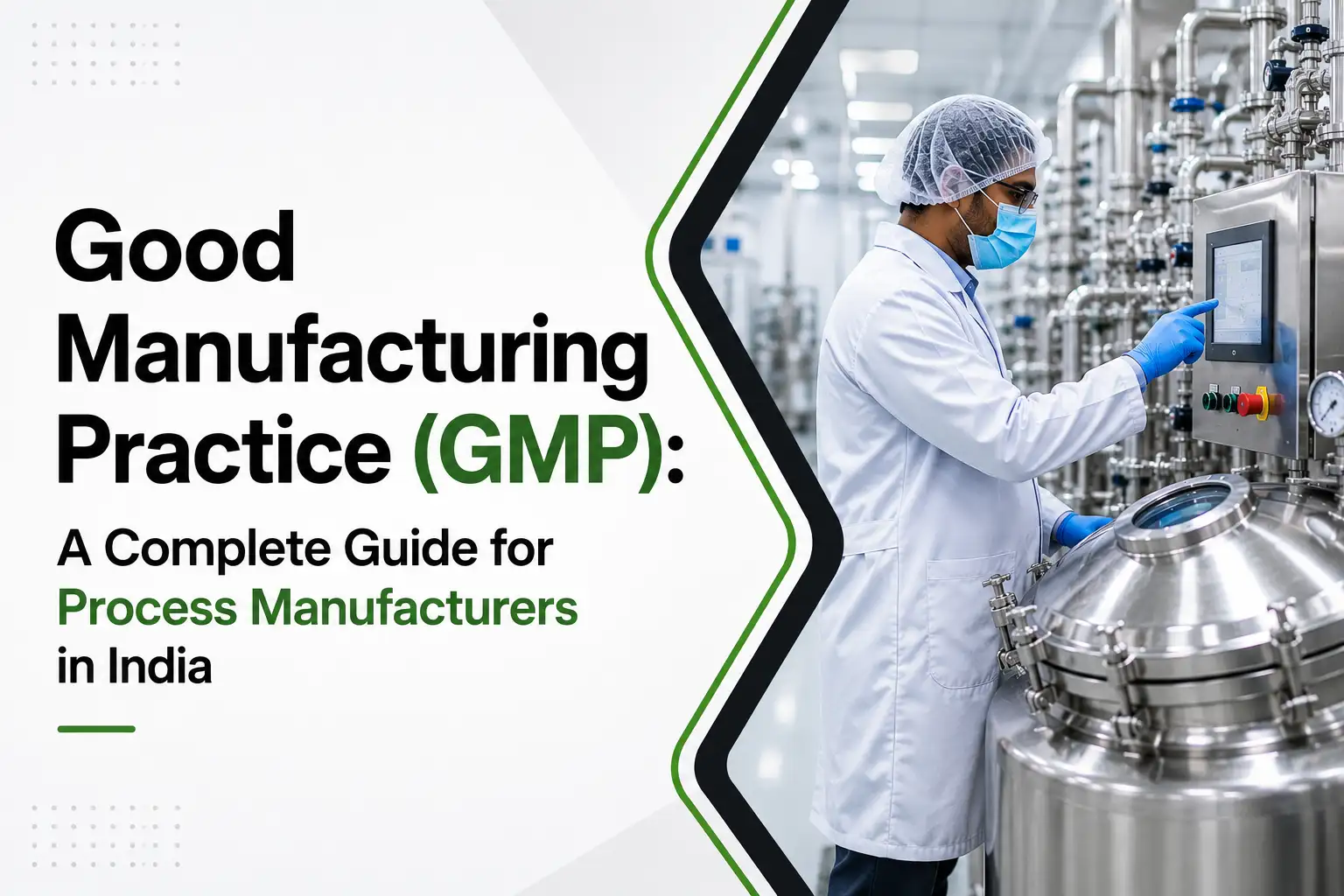
Capable of managing both discrete manufacturing (machinery components, engineering assemblies) and process manufacturing (chemicals, food & beverage, pharma), ERP software adapts to your unique production requirements and business processes. With built-in MRP capabilities to manage material requirements, it automates time-consuming manual tasks while providing managers with real-time visibility into shop-floor operations and supply chain activities.

Market Snapshot

Overview of India’s Manufacturing Industry

India’s manufacturing sector is estimated to be $1.74 trillion in 2026, according to a market research report by Mordor Intelligence. By 2031, it is expected to reach $2.47 trillion, witnessing a growth of 7.26% CAGR. India stands firmly among the world’s top five manufacturing nations by output.

The manufacturing sector is a major contributor to India’s GDP, accounting for a 16% share. As India aims for a $7 trillion GDP by 2030, this share is expected to grow to 21%. Notably, rising domestic consumption, government incentives, and India’s emergence as a global manufacturing hub are the leading factors driving the growth of the manufacturing sector in India.

$1.74T

Manufacturing sector size in 2026

$2.47T

Expected market size by 2031

7.26%

CAGR from 2026 to 2031

16% → 21%

Share of India’s GDP by 2030

Manufacturing ERP Software Explained

Manufacturing ERP software differs from generic ERP applications as it provides complete control over the manufacturing process with a special focus on manufacturer-specific functions such as multi-level BOM, production planning & scheduling, What-if simulation analysis, Material Requirements Planning (MRP), shop floor execution, quality control, batch/ lot traceability, and maintenance management.

With an integrated set of diverse modules, it offers an easy way to plan, track, and execute every aspect of the production lifecycle. It simplifies daily production operations and consolidates business processes into a unified platform, enabling faster and more informed decision-making. Moreover, it offers predictive analytics, demand forecasting, Bill of Materials (BoM) management, and advanced integration with shop floor control systems while handling complex production workflows simultaneously.

Capabilities

Features of Manufacturing ERP Software

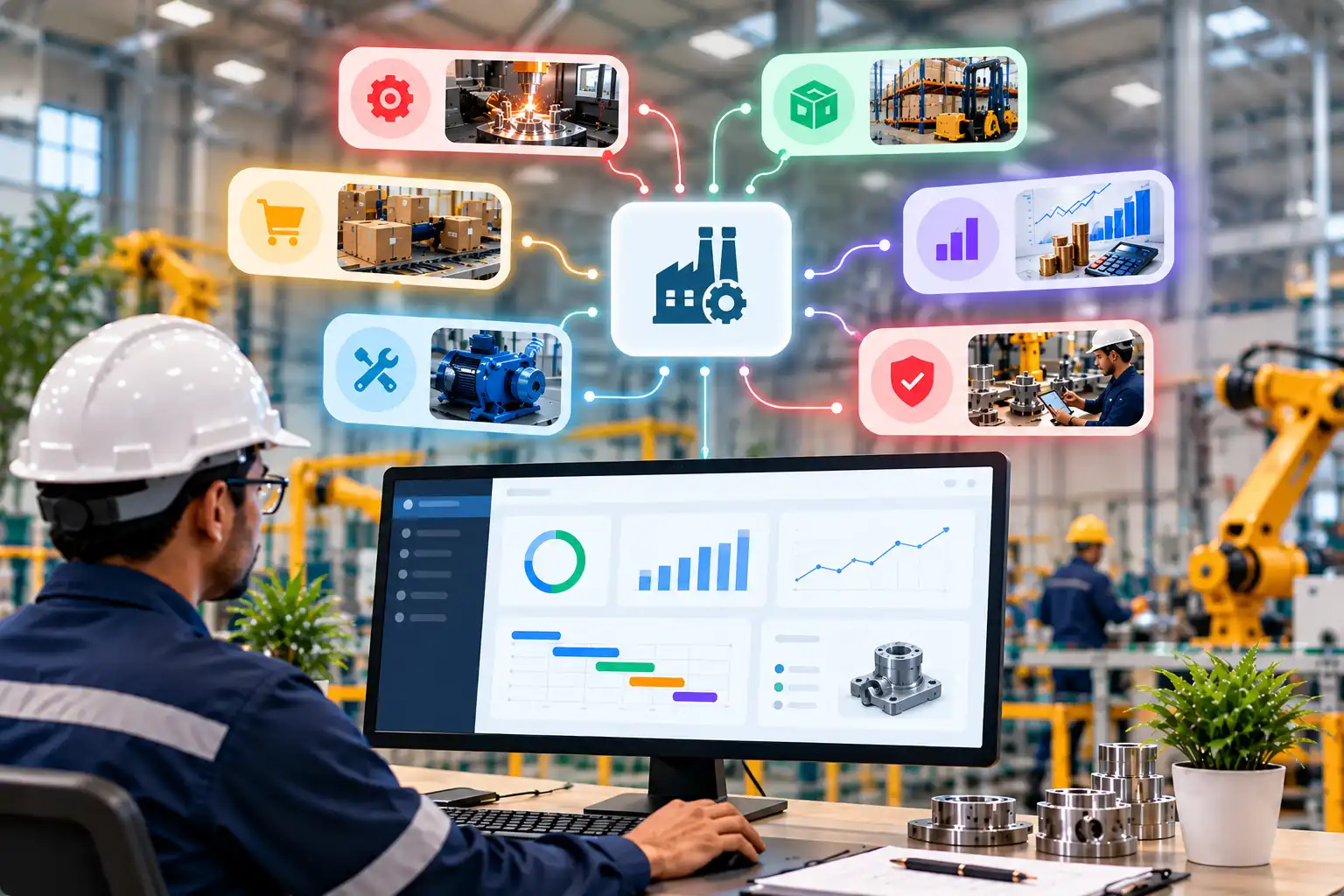
Real-time shop floor control across production, inventory, procurement, finance, assets and AI-driven insights, all in one system.

Production Precision

Streamline complex manufacturing workflows by integrating your shop floor activities. Whether you follow Make-to-Order, Configure-to-Order or Make-to-Stock manufacturing, drive continuous improvement in quality through precise production planning, scheduling, batch traceability and work order management, while reducing non-value added activities.

Inventory Control

Gain complete control over the stock supply chain through complex material requirements planning and accurate demand forecasting. Maintain smooth production flow by managing multi-level BOM. Implement lean inventory practices to lower your storage and warehousing costs while avoiding costly stockouts by setting reorder points.

Procurement Efficiency

Automate the procurement cycle for efficient and cost-effective sourcing. Manage vendor contracts and streamline purchase process, from RFQ document to issuing final purchase orders. Auto-generate recurring POs and set workflows for payment authorization. Build a network of approved suppliers, set binding standards for suppliers, and evaluate their performance based on order delivery commitments, lead time, and quality.

Finance & Accounting

Gain a real-time, consolidated view of cash flows, revenue, and profits for your multi-entity or global operations via customizable, live dashboards. Create and adjust budgets, make project-wise revenue forecasts with access to centralized operational and financial data. Analyze costing with detailed reports for a particular product or an assembly line to improve financial performance.

Close books faster with automated revenue recognition, multi-currency reconciliation, and intelligent accounts payable and receivable workflows. As a robust tool for compliance management, Sage X3 enables you to accurately enforce Indian tax rules for GST, TDS, TCS, ITC/ISD, and RCM.

Asset Tracking

Keep a track of every asset throughout its lifecycle, including asset purchase, maintenance and repair costs. Calculate asset depreciation to guide decisions on new capital investment in expensive machinery and equipment. Align maintenance scheduling with production schedules to minimize downtime.

Flexible Customization

Benefit from the flexible and scalable platform ready to meet your needs today and tomorrow.

A wide range of integrated ERP modules can be customized to align precisely with your well-established processes. Customization allows you to integrate with your existing tools and easily accommodate client-specific manufacturing and shipping requirements into your workflows.

Manufacturing Intelligence

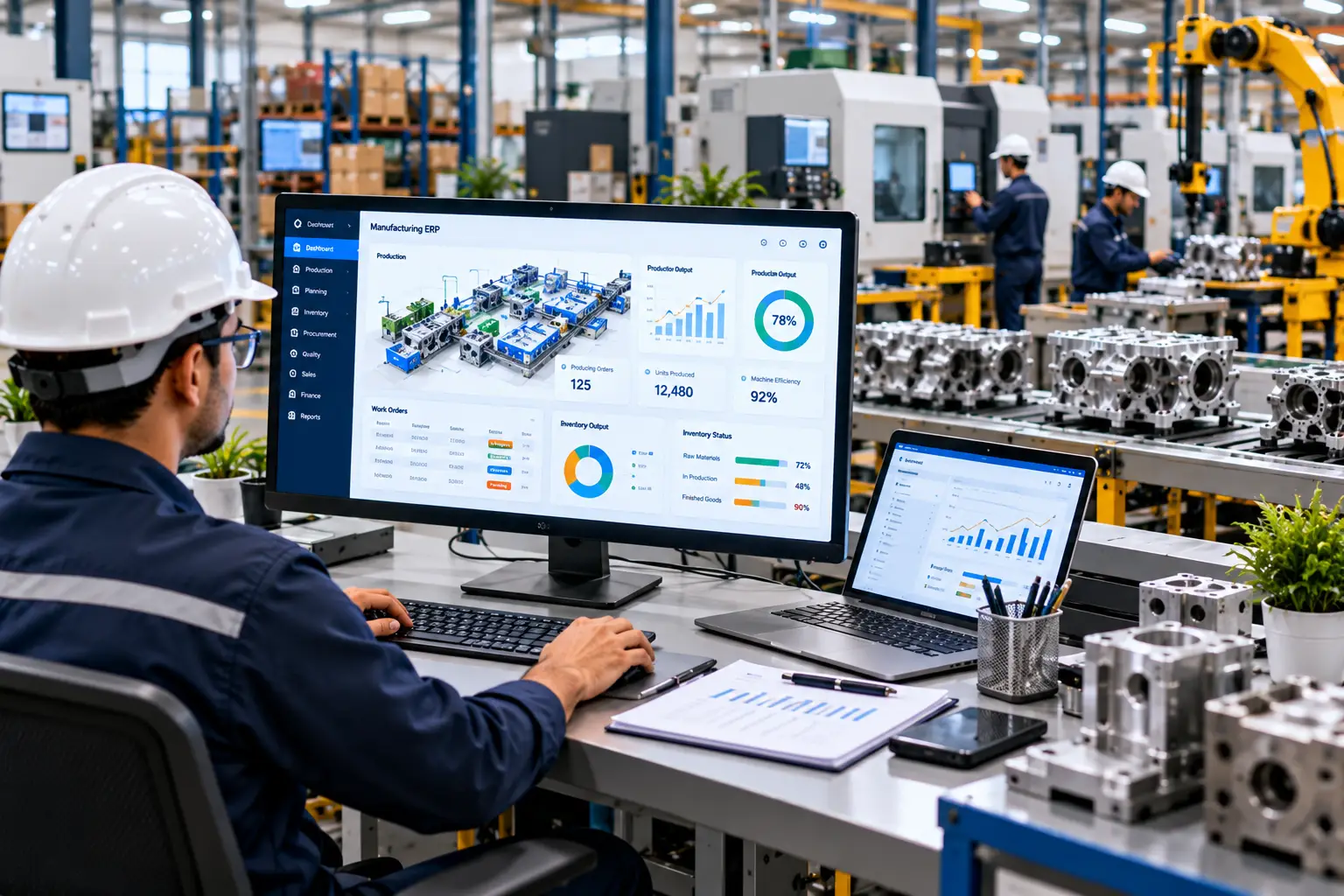
The system’s extensive reporting capabilities ensure you have immediate access to the information you need. Monitor KPIs and get real-time updates on manufacturing schedules and inventory levels across multiple plants. Track rework and production cycle times to eliminate bottlenecks.

AI-driven Insights

Add an extra layer of intelligence within Sage X3 using our Ai-powered GenAI productivity assistant, Sage Copilot. Get instant answers to your questions without manual effort. Spot early indicators of at-risk customers or quickly detect production variances. Automatically capture invoice data, match it with POs and receipts, find discrepancies, and get recommendations on corrective actions.

Business Impact

What are Benefits of Manufacturing ERP Software?

Streamlined Processes

manufacturing erp software connects the entire organization within a single system, automates interdepartmental information exchange, reduces overheads, and improves the productivity of the workforce and machines. Elimination of repetitive manual data entry tasks minimizes errors, ensures order-processing accuracy, and saves time.

Improved Data Management

As your centralized source of all manufacturing and financial data, it makes it easier to track and analyze data. Business Intelligence tools provide users with real-time and reliable information to identify areas of improvement, stay compliant, and make confident data-driven decisions.

Enhanced Customer Service

Customer-facing teams have access to accurate information about order updates, deliveries, pricing, and inventory levels, helping them respond quickly to queries. It helps to improve customer relationships and increase customer satisfaction.

Increased Visibility

Achieve clearer visibility into day-to-day workflows across finance, sales, and supply chain operations. With AI intelligence embedded directly into erp software workflows, teams are always equipped to identify risks in advance while reducing manual intervention.

Quality Assessment

In an environment of constant pressure to produce safe and high-quality goods, ERP software for manufacturing industry is your all-round support to meet industry standards and reduce penalties due to non-compliance. Production teams can track quality at every level, maintain product quality data, and compare it with established benchmarks.

Production Planning

Whether you are into discrete manufacturing or process manufacturing, software adapts to the specific production demands of your industry. The system automatically calculates the material required, and organizes labour and equipment allocation. With multiple orders to process, it makes sure that jobs are completed on time and in the right sequence to lower lead times for customers.

Lower Overhead Cost

Cost savings are easy to realize as better demand planning and scheduling help you significantly reduce idle time and production waste. The system ensures that only the necessary amount of stock is purchased via BOM-aligned procurement. This minimizes the need for extra warehousing space and brings down inventory carrying costs.

Dedicated Manufacturing Modules

Among the many reasons manufacturing ERP software is strategically important is its dedicated ERP modules that meet all operational and financial requirements of the industry. This gives you complete control and real-time visibility at every level, including procurement, production, inventory, quality, GST tax compliance, distribution, sales, and customer service.

Deployment Options

Types of Manufacturing ERP Deployments

On-premise, cloud, and hybrid are the three primary types of manufacturing ERP deployments, each with its own distinct advantages.

On-Premise

Hosted on the company’s internal server, on-premise ERP gives manufacturers complete control over their data. It ensures business continuity even during network disruptions and Internet outages.

Pros

Cons

Cloud

As the name suggests, cloud ERP hosts your data on the vendor’s remote servers. The vendor is responsible for regular maintenance & updates.

Pros

Cons

Hybrid

Hybrid ERP offers the best of both on-premises and cloud ERPs. Integrating both the technologies together into one system, it helps reduce overall cost and meet your specific business needs.

Pros

Cons

Under the Hood

How Does ERP for Manufacturing Industry Work?

Large manufacturing enterprises have complex workflow, which often results in delays, inefficiencies, and increased costs. Manufacturing ERP promotes smooth workflow and enables them to simplify operational complexities, leading to better growth potential.

Let’s deep dive into how the Manufacturing ERP software works:

Single Source of Truth

Consolidate data from different business departments and gain a holistic view of operations for smart decision-making.

Process Unification

Automate processes across different business aspects, from production management and sales to supply chain.

Manufacturing Planning

Plan & schedule manufacturing processes, streamline procurement, reduce costs, and collaborate seamlessly with your vendors.

Inventory Optimization

Track your inventory levels, forecast demand for your products, and reduce inventory storage & handling costs.

Quality Assurance

Streamline quality control, track material usage, and ensure adherence to the regulatory standards to build high-quality and safe products.

Deep Analytical Insights

Analyze sales trends, improve turnover, reduce costs, and unlock new opportunities with custom reporting and analytical features.

Buyer’s Guide

How to choose the Best Manufacturing ERP Software for your business?

Here’s a simple guide to choosing the best manufacturing erp software for your company:

01

Evaluate your company’s strategic goals and map out the essential business processes that need to be transformed.

02

Outline the functional and non-functional requirements for your new ERP system in terms of its functionality and integration.

03

Pick up ERP vendors with long industry experience, reputation, and greater customization capabilities.

04

Compare your ERP budgets against the vendor’s pricing. Take the training, customization, integration, and other costs into consideration.

05

Request personalized demos from the shortlisted vendors, ask any doubts you may have, and make an informed decision.

2026 Shortlist

Best Manufacturing ERP Software in India (2026)

We have handpicked the best manufacturing ERP software in India with their features & offerings, and supported deployment types.

Manufacturing ERP SoftwareKey Manufacturing FeaturesBest ForDeployment Type
Sage X3
  • AI-driven Intelligent Analytics
  • Predictive Analytics
  • Production planning
  • Material Requirements Planning (MRP)
  • Multi-level BOM
  • Shop-floor Control
  • Quality Management
  • Batch/Lot traceability
  • Inventory & supply chain
  • Cost control
  • Multi-country & multi-currency capabilities
Growing mid-sized and large manufacturers with complex operations & extensive customisation requirementsCloud / Hybrid
SAP Business One
  • BOM
  • MRP
  • Production planning
  • Inventory management
  • Batch/serial tracking
Growing and mid-sized manufacturersCloud / On-premise
Microsoft Dynamics 365 Business Central
  • Production orders
  • Capacity planning
  • Supply planning
  • Inventory management
Mid-sized manufacturers already using Microsoft ecosystemCloud / On-premise
Oracle NetSuite
  • Production management
  • Work orders
  • Demand planning
  • Inventory & Procurement
  • Multi-subsidiary management
Growing and multinational manufacturersCloud
SAP S/4HANA
  • Advanced production planning
  • Production execution
  • Quality management
  • MRP
  • Supply chain management
Large enterprises and multi-plant manufacturersCloud / On-premise / Hybrid
Epicor Kinetic
  • Production management
  • MRP
  • Shop-floor execution
  • Quality
  • Costing
Industrial and complex manufacturersCloud / On-premise
Odoo
  • Work orders
  • Shop-floor control
  • PLM
  • Maintenance
SMEs seeking a modular ERPCloud / On-premise
ERPNext
  • BOM
  • Work orders
  • MRP
  • Production planning
  • Inventory
  • Quality control
  • Procurement management
  • Accounting
Small and mid-sized manufacturers seeking open-source ERPCloud / On-premise
Acumatica
  • Production scheduling
  • MRP
  • BOM
  • Production orders
  • Inventory
  • Warehouse management
  • Costing
Growing manufacturers needing flexible ERPCloud / Private Cloud
TallyPrime
  • Inventory
  • Purchasing
  • Sales
  • GST
  • Streamlined manufacturing/accounting workflows
Small businesses primarily needing accounting and inventoryOn-premise / Cloud access

Side by Side

Comparison of best ERP Software for manufacturing Industry

Now, let’s deep dive into a more detailed comparison of the features offered by the above-discussed manufacturing ERP software.

1. Sage X3

Sage X3 is a top-notch manufacturing ERP that provides a single system to manage discrete, process, and mixed-mode production. By integrating production, procurement, sales, customer support, and finance modules, it provides cross-module integration, streamlines quality control, simplifies production costing, and supports multi-level BOM management. Built to meet the needs of modern enterprises operating globally, it offers multi-country, multi-currency, and multi-regulatory capabilities. Get deeper insights into your company-wide data and make smart, confident decisions with a fully flexible & customisable solution built for growing mid & large enterprises.

2. SAP Business One

SAP Business One offers comprehensive accounting, fixed asset management, and financial reporting & analysis. It offers unique manufacturer-specific modules to streamline everything from raw material procurement and production scheduling to final sale & master data management.

3. Microsoft Dynamics 365 Business Central

An all-in-one solution that allows manufacturers to manage critical aspects of their operations and streamline manufacturing processes, customer interactions & sales, and make smarter decisions. Formerly known as Navision, it was acquired by Microsoft in 2002 and rebranded and transformed into an enterprise-grade solution.

4. Oracle NetSuite

Oracle NetSuite is well-suited for manufacturers who need a single, comprehensive system to manage everything from production, inventory, supply chain, and finance through a cloud-based interface. Some of the core capabilities of NetSuite are multi-entity management, segmentation & analysis, inventory & logistics control, and seamless vendor management.

5. SAP S/4HANA

SAP S/4HANA is an enterprise solution built for manufacturers with complex business needs. It lets them manage day-to-day aspects of their operations such as production planning, purchases & sales, vendor management, service requests & delivery, and real-time data sharing through a centralised data repository.

6. Epicor Kinetic

Epicor Kinetic offers a diverse range of modules including product management, production, supply chain, sales, financial, Business Intelligence (BI), and master data management to streamline different aspects of the manufacturing business operations. It supports creating custom product quotes, tracking shop floor progress, and automated inventory replenishment, among others.

7. Odoo

Odoo is an open-source manufacturing MRP. Available as both an on-premise & cloud solution, it handles your everyday production complexities and takes care of everything from raw material intake to finished goods dispatch. Odoo optimises your workflows, enhancing overall production efficiency and cost control.

8. ERPNext

ERPNext is a purpose-built manufacturing ERP with a core focus on reducing manual effort and providing a complete solution to manufacturers. ERPNext offers automated production scheduling, capacity planning, and vendor collaboration. It can be hosted both internally and on the vendor’s cloud servers.

9. Acumatica

Acumatica is built for growing manufacturers who need a flexible & adaptable solution for their project-driven production needs. It offers CRM integration, integrated compliance support, job shop estimates, multi-modal manufacturing features, resource planning, and much more.

10. TallyPrime

TallyPrime is a comprehensive manufacturing software that offers real-time visibility, integrated material management, and powerful analytical reporting capabilities. It lets you create multi-level BOMs for a diverse range of products, analyse job profitability, manage orders, track inventory across warehouses, and record the entire production lifecycle.

Industry Pain Points

Major Challenges Faced by the Manufacturing Industry

Manufacturers in India face several challenges, including the complexity of multi-location integration, limited access to critical information, inefficient resource utilization, low employee productivity, and high inventory costs.

Integration of Operations

Manufacturing companies with multiple locations find it difficult to integrate their operations. It is mainly due to a lack of standardization, complex process management, and resource fragmentation across areas. To overcome this, companies must streamline and coordinate their operations across all locations.

Lack of Critical Information

With ever-evolving customer preferences, regulatory changes, and technological advancements, manufacturers must quickly access accurate information to remain competitive. Without the right data, companies struggle to keep up, leading to decreased profits.

Inefficient Resource Utilization

Manufacturing companies must ensure that their production capacity, inventory, and human resources are deployed efficiently and cost-effectively. Common resource utilization challenges include a lack of the right digital tools, a shortage of skilled employees, and inadequate planning and forecasting.

Reduced Employee Productivity

Low productivity at the workplace impacts a company’s revenue and customer service. Factors affecting employee productivity include job stress, lack of motivation, excessive paperwork, and inefficient work processes. Companies must solve these issues to ensure their employees remain productive and motivated.

Higher Inventory Costs & Wastage

Holding sufficient material on hand is necessary to meet customer orders on time. At the same time, manufacturers must avoid unnecessary surplus stock as it ties up working capital and increases the risks of dead stock. Adopting inventory management software is essential to forecast demand, streamline replenishment processes, and ensure optimal stock levels.

Smart Manufacturing

How Industry 4.0 is Transforming into Smart Manufacturing with ERP

Implementing 4.0 standards requires manufacturers to have the right mix of systems and tools, such as IIoT sensors and computer vision systems that can collect real-time data from machines, and advanced ERP software like Sage X3, driven by artificial intelligence and machine learning algorithms to analyze large volumes of complex data from machines.

Here’s how ERP helps manufacturers implement Industry 4.0 standards:

What’s Next

Future Trends in Manufacturing ERP

AI-driven insights, industry-specific ERPs, Agentic AI, Predictive Maintenance, and Environmental, Social, and Governance (ESG) are the future trends in the manufacturing industry.

AI-Driven Insights

By integrating modern technologies such as Artificial Intelligence (AI) and Machine Learning (ML), companies transform raw data into actionable insights. AI-powered ERP provides predictive insights, allowing businesses to improve the quality of forecasting and decision-making.

Industry-Specific ERPs

Generic ERPs are a thing of the past as they lack industry-specific functions and workflows, affecting the overall productivity and competitiveness of the company. Businesses are increasingly deploying manufacturing ERP, automotive ERP software, chemical ERP software, pharma ERP software, and furniture ERP software to meet their unique industry requirements.

Agentic AI

Companies use Agentic AI to perform cross-functional analysis and gather valuable insights from consolidated data sources. Agentic AI transforms the traditional screening and onboarding process with better speed & precision, allowing businesses to lower costs and detect seasonal trends & patterns more accurately.

Predictive Maintenance

Predictive Maintenance involves using statistical techniques to predict future trends & patterns. For example, manufacturers analyse machine logs & temperature changes, vibration patterns, etc to predict the need for the next maintenance and avoid an unexpected breakdown.

Environmental, Social, and Governance (ESG)

Recently, the Government of India published a press release updating its waste management frameworks and integrating Extended Producer Responsibility (EPR) and the Polluter Pays Principle for manufacturers. Businesses must adopt Environmental, Social, and Governance (ESG) practices at every stage of the manufacturing process to ensure regulatory compliance.

Why Sage X3

Here’s why leading manufacturers across India choose Sage X3

Sage X3 is a highly scalable and customizable manufacturing ERP solution, powered by Sage Copilot. It features an integrated set of modules designed to streamline key business functions, including procurement, production, sales, inventory and supply chain, project management, and finance. This best-in-class software offers robust integration capabilities and extensive customization to meet your unique business needs and improve market responsiveness.

FAQ

Manufacturing ERP Software FAQs

Answers to the questions manufacturers ask most before choosing an ERP: features, customization, implementation timelines, top solutions, and how Sage X3 compares with a generic ERP.

Still have questions?

Talk to our ERP experts and get answers specific to your plant and processes.

What is ERP Software for Manufacturing Industry?

ERP Software for Manufacturing Industry is a comprehensive, integrated application suite that automates and streamlines manufacturing and production processes. These systems give companies greater visibility into their production processes, allowing them to track and manage their resources better. ERP system enable production businesses to monitor inventory levels better, monitor supplier performance and manage customer orders.

Here are the must-have features to look for in Manufacturing ERP Software:

  • Production Planning & Scheduling: Align your resources and pre-plan production activities for on-time order delivery.
  • Inventory Control: Automated inventory replenishment saves your time and improves accuracy.
  • Quality Assessment: Analyze product quality at every stage of the production level to meet industry standards and improve customer satisfaction.
  • Business Intelligence: Get readily available insights, and pre-built reports & dashboards for strongly data-driven decision-making.
  • Compliance Management: Streamline financial management and ensure audit-readiness.

ERP Software for Manufacturing industry is an indispensable solution for modern-day businesses. Here’s why:

  • It helps to streamline operations and improve efficiency.
  • Provides real-time information on production and inventory.
  • Allows manufacturers to make better decisions about what to produce and when to produce it.
  • Improves customer service by allowing manufacturers to quickly and easily access customer information.
  • Reduces costs by automating multiple business processes.
Yes, we customize ERP system as per the requirement of your company. Our team of experienced professionals understands your company’s business needs and customizes the ERP system to match your company’s specific requirements. We can customize the ERP system to integrate with existing systems and provide you with the flexibility to customize the system to suit the ever-changing needs of your business.
Enterprise resource planning implementation can be a complex process. The time it takes for an ERP system to go will depend mainly on the project’s scope and the complexity of the system being implemented. Generally, organizations can expect an ERP implementation in the manufacturing industry anywhere from two weeks to six months, depending on the size and complexity of the project.

For a small business, the time frame can be relatively short. Initially, the length of time it will take to go live can be estimated by assessing the project’s scope. As the project management software progresses for the manufacturing industry, the timeline may need to be adjusted depending on the team’s progress.

A generic ERP is an all-inclusive ERP software designed for companies across various industries and varying sizes. Since it is built with a one-size-fits-all objective, you may find some unnecessary features, which are part of its broader set of functionalities. It may lack various industry-specific capabilities, making your business less responsive to changing market dynamics.

Sage X3 Manufacturing ERP software can be a perfect fit for manufacturers as it is built to meet the unique needs of the manufacturing industry. It includes various modules from procurement, shop floor management, Bill of Materials (BoM), quality control, supply chain, and financial management, among others. It provides better control over the manufacturing and supply chain operations, helping you meet the varying needs of the manufacturing operations.

In the manufacturing industry, the majority of the revenue is generated through physical assets like production machinery and equipment. Reliability of such assets is thus crucial to prevent production failures. The objective of asset maintenance is to ensure that the machinery lasts for as many years as possible while delivering peak performance.

Equally important are the savings generated through efficient maintenance practices like

  • timely servicing to minimise breakdowns,
  • spare parts inventory control to lower storage costs,
  • skillfully assigning the right technicians and subcontractors, and
  • tracking repair history to optimise future maintenance tasks.

DimoMaint MX is the new generation of web CMMS that simplifies the lives of maintenance teams. Mobile, scalable, and user-friendly solution, DimoMaint MX promotes collaboration and communication among team members so that they can effectively plan maintenance work and swiftly respond to breakdown and repair requests.

From Our Blog

Explore more about Manufacturing Industry

Guides and insights on manufacturing ERP, costs, processes and compliance from the Sage Software team.